Think of a company information database as your real-time GPS for the B2B world. It's a dynamic platform that pulls together, organizes, and serves up detailed data on businesses, giving you a constantly updated map of your target market.
This is a world away from the static, outdated spreadsheets that so many teams used to rely on. Those old lists are like trying to navigate a new city with a map from ten years ago—you'd hit dead ends, miss new highways, and waste a ton of time.
Understanding Company Information Databases
A company information database solves that exact problem. It provides a living, breathing view of the business landscape.
Instead of just holding a list of names and emails, these platforms gather a huge amount of data to create rich, detailed company profiles. You get a complete picture that goes way beyond basic contact info, helping you understand who a company is, what they need, and when they might be ready to buy.
What Kind of Data Is Included?
These tools pull together critical business intelligence so you can understand potential customers on a much deeper level. You’ll typically find:
- Firmographics: The basics, like company size, industry, physical location, and annual revenue.
- Technographics: A look under the hood at the specific software and tech a company uses—from their CRM to their marketing tools.
- Buying Intent Signals: Clues that a company is actively looking for solutions like yours, such as an increase in web traffic around certain topics or content downloads.
- Contact Information: Verified email addresses, direct-dial phone numbers, and social profiles for the key people you need to reach.
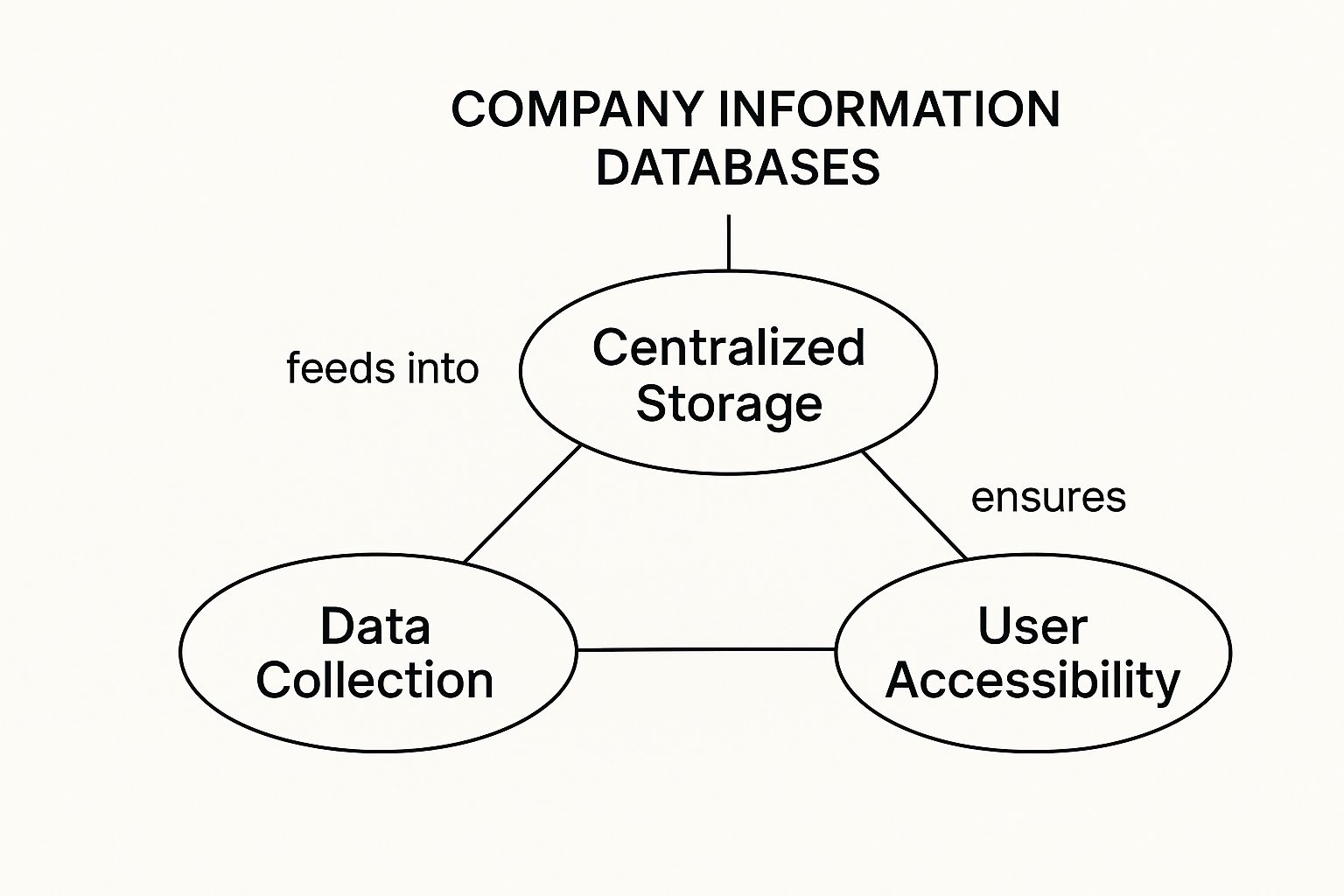
The Shift from Static Lists to Dynamic Intelligence
The difference between a simple contact list and a modern company database is night and day. One is a historical snapshot, while the other is a live feed of actionable intelligence.
Here’s a quick comparison to see what I mean:
Traditional Contact List vs. Modern Company Information Database
| Feature | Traditional Contact List | Company Information Database |
|---|---|---|
| Data Freshness | Static; data decays quickly | Dynamic; continuously updated in near real-time |
| Data Scope | Basic contact info (name, email, phone) | Rich profiles (firmographics, technographics, intent signals) |
| Functionality | Simple data storage | Advanced search, filtering, and integration capabilities |
| Strategic Value | Limited to basic outreach | Powers targeted prospecting, lead scoring, and market analysis |
| Maintenance | Manual, time-consuming updates | Automated data verification and enrichment |
| Integration | Isolated; requires manual export/import | Seamlessly syncs with CRM, marketing automation, and more |
This table really drives home the evolution. We've moved from simply storing data to actively using it as a strategic tool to find and engage the right customers at the right time.
The Growing Importance of Accurate Data
The hunger for reliable business data is only getting bigger. The global information services market, which includes these databases, was valued at $160.1 billion in 2023 and is projected to hit $276.5 billion by 2030. This explosive growth makes it clear: quality data is no longer a "nice-to-have"—it's a core part of any successful business strategy. You can dig into the numbers in this information services market report.
A company information database isn't just a list of contacts; it's an intelligence engine. It helps your team stop guessing and start making smart, data-driven decisions that lead to predictable growth.
By turning raw information into real insights, these platforms have become essential. They give you the clarity and confidence to focus your efforts where they'll have the biggest impact.
Essential Features of a Powerful Database

Let's be honest—not all company information databases are created equal. Many can spit out a basic list of businesses, but a truly powerful platform is more like a growth engine for your sales team. It delivers the specific insights you need to actually close deals.
Think of it this way: a basic tool is an address book. A great one is a detailed, interactive map of your entire market. The difference lies in a handful of key features that turn raw data into a genuine strategic advantage. Without them, you're flying blind, wasting time and money on outreach that just doesn't land.
Data Accuracy and Verification
The bedrock of any great database is the quality of its information. In sales, bad data is worse than no data. It leads to bounced emails, awkward calls to people who left their job months ago, and golden opportunities that slip through your fingers.
Top-tier platforms live and breathe data integrity. They have a constant, relentless process of verifying and enriching the information they provide. This isn't a one-and-done check; the best systems use a smart mix of technology and human review to make sure the data you're using is fresh and correct. It’s like a self-weeding garden—the platform is always pulling out the bad stuff so your team can pick the good.
A solid verification process means:
- Reduced Bounce Rates: Your emails and calls actually connect with the right person on the first try.
- Increased Credibility: Your team looks sharp when they approach prospects with up-to-date, accurate details.
- Higher Efficiency: Reps can spend their time selling, not playing detective to find a working phone number.
Depth and Breadth of Data Points
Beyond just a name and an email, a powerful database gives you a rich tapestry of information. It helps you understand a company on a much deeper level. It’s not just about knowing a company’s address; it’s about understanding their entire business ecosystem.
This means having access to a wide range of data points that paint the full picture of your target accounts. For example, instead of just seeing a company's general revenue range, you can access detailed financial information—a game-changer for qualifying high-value prospects. For a closer look at this, check out our guide on how to find private company financial information.
A database with deep data transforms your outreach from a generic pitch into a highly relevant conversation. It allows you to speak directly to a prospect’s specific challenges and needs.
The demand for this kind of detailed intelligence is exploding. The business information market, which includes these databases, was estimated at around USD 82.59 billion in 2024. It’s projected to hit USD 119.42 billion by 2030, which shows just how much businesses are relying on actionable company data to get ahead.
Advanced Search and Filtering
Having a mountain of data is completely useless if you can't find the needle in the haystack. This is where advanced search and filtering capabilities come in. The best platforms let you slice and dice data with surgical precision, so you can build hyper-targeted lists of your ideal customers.
Imagine you want to find SaaS companies in North America with over 50 employees that use a specific CRM and just landed a new round of funding. A great filtering system makes that search possible in seconds.
This level of detail means your sales team can stop trying to "boil the ocean" and start focusing only on the accounts with the highest chance of closing. It's the difference between casting a huge, ineffective net and using a finely tuned spear to hit your exact target.
Seamless CRM Integration
Finally, any modern database has to play nicely with the tools your team already uses every day. A standalone platform that forces you to constantly copy and paste data creates friction and just slows everyone down. That's why seamless integration with your Customer Relationship Management (CRM) system is an absolute must-have.
With a direct connection, data flows automatically between the two platforms. When a rep finds a promising new lead in the database, they can push it right into the CRM with a single click. Even better, the database can keep enriching your existing CRM records, ensuring your information never gets stale.
This creates a single source of truth, gets rid of annoying data silos, and helps your team work smarter, not harder. It makes sure the valuable insights from your database are always right where they're needed most—inside your team's daily workflow.
Putting Your Database to Work in Sales and Marketing
It’s one thing to understand the features of a company information database, but it’s another to see what it can actually do. These platforms aren't just digital filing cabinets for data; they're engines for driving real-world results. Let's move past the theory and look at how smart sales and marketing teams put this information to work.
Think about a SaaS company selling project management software. Their perfect customer is a mid-sized tech company that's probably frustrated with a competitor's tool. In the old days, finding these specific companies was like looking for a needle in a digital haystack.
With a good database, they can now zero in on those perfect prospects with surgical precision.
Hyper-Targeting Leads with Technographics
The sales team can start by building a super-specific search filter. They're not just looking for companies in a certain industry or of a certain size anymore. They can drill down to the exact technologies a prospect is using.
Their search might look something like this:
- Industry: Software & IT Services
- Employee Count: Between 100 and 500
- Technology Used: Competitor A's project management tool
- Recent Activity: Hiring for "Project Manager" roles
In seconds, the database kicks back a curated list of companies that match this ideal profile. This is no longer a cold list. It's a warm list of businesses with a clear, identifiable need. Now, the sales team can craft a message that hits home, mentioning the competitor's tool and highlighting how their solution solves its known pain points. The result? Way more replies and much better meetings.
Fueling Account-Based Marketing Campaigns
Over in marketing, the team is getting ready to launch an Account-Based Marketing (ABM) campaign. The whole idea is to stop casting a wide, generic net and instead focus all their energy on a handpicked group of high-value accounts.
A company information database is the central nervous system for this kind of strategy. The team uses it to pick out and research their top 50 target accounts. They can pull up organizational charts to map out the key decision-makers, watch for company news to find the perfect time to reach out, and figure out likely pain points from all the data available.
This deep insight lets them create tailored content, like a whitepaper on project management challenges specific to that company's industry. They can then run targeted ad campaigns that speak directly to the stakeholders they’ve already identified.
By putting resources behind a curated list of high-potential businesses, marketing teams see a much better return on their investment. The whole game shifts from chasing lead quantity to ensuring account quality, which is what successful ABM is all about.
Uncovering New Markets for Expansion
These databases aren't just for the day-to-day grind; they're also incredibly powerful for planning your next big move. Imagine a business has pretty much tapped out its local market and is looking to expand internationally. Where do they even begin?
Instead of just guessing, they can use the database to size up global markets. They can search for companies that fit their ideal customer profile in different countries, getting a feel for market size and potential demand without ever leaving the office. This data-first approach helps them pinpoint promising new territories, slashing the risk and cost that comes with expansion.
It’s a much smarter way to operate than relying on gut feelings or outdated market reports. You get a live view of global opportunities, helping leadership make confident decisions about where to invest next.
This same method is also fantastic for https://saasdatabase.net/competitive-intelligence-gathering/, letting you keep an eye on a competitor's hiring sprees, tech stack changes, or expansion plans to stay one step ahead.
How to Choose the Right Database for Your Team

Picking the right company information database can feel overwhelming. With so many vendors all claiming to have the best, most accurate data, how do you cut through the noise? The trick is to have a clear game plan and focus on what your team actually needs to hit its goals.
This isn't just about buying another piece of software; it's a serious investment. In fact, the global database market was valued at around USD 150.38 billion in 2025 and is expected to rocket to USD 292.22 billion by 2030, according to Mordor Intelligence. This explosive growth is all about businesses needing smarter, cloud-based ways to handle company data.
So, let's walk through the essential things you need to look for to make the right choice.
Data Quality and Accuracy Come First
This is the big one. If the data is bad, nothing else matters. A database packed with old phone numbers, incorrect job titles, or companies that no longer exist is worse than useless—it actively wastes your team's time and can even damage your reputation.
You need to dig into how a vendor gets and verifies their information. Ask them straight up: How often do you refresh your data? Do you use AI, human verification, or a mix of both? A good partner will be completely open about their process and can show you hard numbers on their accuracy rates.
Find a Specialist for Your Niche
General-purpose databases try to be everything to everyone, but that often means they aren't great for anyone in particular. Some platforms are fantastic for tech and software, while others have a much deeper well of information for industries like manufacturing or healthcare.
Think about who you sell to. If your entire business model is built around SaaS companies, a generic database might not cut it. You'd be far better off with a platform that lives and breathes that world. For example, teams hunting for the next big thing would get a huge leg up from a dedicated startup company database.
Choosing a vendor is like hiring a new team member. You need to ensure their skills and expertise align perfectly with the job you need them to do. A mismatch can lead to frustration and wasted resources.
Insist On Smooth CRM Integration
Your new database needs to play nice with the tools your team already uses every single day. If it doesn't plug right into your CRM, you’re just creating more work. Seamless integration is a deal-breaker.
Look for providers that offer native, one-click connections to major players like Salesforce, HubSpot, or Pipedrive. When it works properly, data flows effortlessly, automatically enriching your existing contacts and giving everyone a single, reliable source of information.
Make a Vendor Evaluation Checklist
To keep your evaluation process organized and objective, it helps to use a scorecard. This simple checklist lets you rate each potential vendor side-by-side based on the criteria that matter most to you.
| Evaluation Criterion | Vendor A Score (1-5) | Vendor B Score (1-5) | Notes |
|---|---|---|---|
| Data Accuracy Rate | How transparent are they about their data quality? | ||
| Data Refresh Frequency | How often is the information updated? | ||
| Industry Specialization | Do they have deep coverage in our target market? | ||
| CRM Integration Quality | Is it a native, seamless connection? | ||
| Ease of Use | Can the team get started without extensive training? | ||
| Pricing Transparency | Are the costs clear and predictable? | ||
| Scalability | Can the plan grow with our team? | ||
| Customer Support | What do reviews say about their support team? |
Using a structured checklist like this turns a complicated decision into a much clearer comparison, helping you see which provider truly fits your business needs.
Understand the Real Cost and Scalability
Finally, let's talk money. Pricing models are all over the map, from per-user licenses to credit-based systems where you pay as you go. You have to look closely at what you’re actually getting for the price.
Here are a few questions you should always ask:
- What are the limits? Are there caps on how many contacts you can export or how many people can use the platform?
- Is there a free trial? Can you get your hands on the data and test its quality before signing a contract?
- How does the pricing scale? What will it cost when you double your sales team next year?
Find a partner with a clear and flexible pricing plan. The right database is a long-term asset, so make sure you pick one that can support your growth for years to come.
What's Next for Data-Driven Growth?
We've covered a lot of ground in this guide, but it all comes down to one core idea: a company information database is your engine for strategic growth. Think of it like this: you can either navigate your market with a dusty old paper map or use a live GPS that points out every opportunity, roadblock, and shortcut in real time.
That’s what a data-driven approach truly is. It’s about swapping guesswork for genuine insight. When you do that, you stop chasing leads in the dark and start connecting with the right accounts at the exact right moment. This is how you build a predictable revenue machine.
The Next Wave: Artificial Intelligence
But this evolution is far from over. The future of company databases is already being shaped by artificial intelligence and machine learning, and these tools are about to get a whole lot smarter.
Imagine a platform that doesn't just show you companies that fit your ideal customer profile but predicts which ones are about to start their buying journey. That’s what AI is starting to do. It can analyze thousands of subtle signals—a spike in hiring for a specific role, a new funding announcement, or even increased web traffic to certain types of content—to flag a company showing buying intent before your competitors have a clue.
The next frontier isn't just about finding data; it's about predictive intelligence. AI will help teams anticipate a prospect's needs, allowing them to engage with a perfect solution before the prospect even starts looking.
This fundamentally changes the game. Sales teams can finally shift from being reactive to proactive. Instead of waiting for a lead to come in, they can start a conversation with a company that’s already primed for their solution. That’s a massive competitive advantage.
By putting these tools to work today, you’re not just sharpening your current outreach efforts. You’re preparing your business for the next era of intelligent, data-powered growth. Hopefully, the insights in this guide are your first step toward transforming how you find, engage, and win your ideal customers.
Frequently Asked Questions
Jumping into the world of B2B data can feel a bit overwhelming, and you probably have a few questions. As you think about getting a company information database, it's smart to wonder how it's different from other tools you already use, or if it even makes sense for your business.
Let's tackle some of the most common questions head-on. My goal is to clear things up so you can feel confident about your next move.
How Is This Different From LinkedIn Sales Navigator?
That's a great question, and one I hear all the time. While LinkedIn Sales Navigator is a fantastic tool for finding and connecting with specific people, it's really just one part of a bigger picture. A company information database gives you a much wider, more strategic view of the entire market.
Here’s an analogy: think of Sales Navigator as a high-quality phone book for professionals. A company information database, on the other hand, is more like a detailed market intelligence map. It goes way beyond just who works where. You get:
- Deep Firmographics: The nitty-gritty details on company size, revenue, industry codes, and even corporate structure.
- Technographics: A peek under the hood at the exact software and tech stacks a company is using.
- Automated Data Enrichment: These platforms are designed to plug right into your CRM, constantly verifying and updating your records automatically.
Sales Navigator is for the individual salesperson's outreach. These databases are built to power your entire go-to-market strategy, from territory planning to large-scale campaigns.
How Often Is The Data Updated?
In sales and marketing, old data is worse than no data at all. It leads to wasted time and missed opportunities. The best database providers are obsessed with data freshness because they know a critical buying signal—like a new funding round or a C-suite hire—has a very short shelf life.
The top platforms don't just update their data quarterly or monthly. They use a smart mix of AI crawlers, public record analysis, and human review teams to catch changes in near real-time. This means you're always working with the freshest intelligence possible.
This constant refresh cycle ensures you can base your outreach on what's happening right now, which is key to starting a conversation that actually lands.
Are These Databases Affordable For Small Businesses?
Yes, absolutely. It's a common myth that this kind of powerful data is only for the big players with massive budgets. The market has changed a lot, and today, there's a huge range of solutions built for businesses of all sizes.
Many providers have moved to more flexible pricing to open the doors for smaller teams. It's common to see options like:
- Starter plans designed for small teams or solo users.
- Pay-as-you-go or credit-based models, so you only pay for what you need.
- Tiered packages that let you scale up your access as your company grows.
This means startups and small businesses can finally get their hands on the same high-quality data that enterprises use to find their next customer.