
The Software as a Service (SaaS) industry is incredibly competitive, and keeping track of the key players can be a major challenge. For B2B sales teams and SaaS professionals, identifying the fastest growing SaaS companies isn’t just about curiosity; it’s about finding potential partners, customers, or investment opportunities before they become household names. Pinpointing these high-growth businesses requires knowing exactly where to look for reliable, data-backed information.
This guide simplifies that process. We’ve compiled a list of the most authoritative platforms and reports that track and rank companies based on growth rates, funding, and market influence. Instead of just listing names, we show you how to use these resources to gain a competitive edge. Each entry explains what makes the platform valuable, how to navigate it, and what specific insights you can pull to inform your strategy.
You’ll discover the best places to monitor momentum, from peer-review sites to prestigious financial rankings. We provide direct links and screenshots for each source, making it easy for you to start your research immediately. This list is your blueprint for uncovering the next wave of SaaS leaders and understanding the trends driving their success. Let’s get started.
1. G2
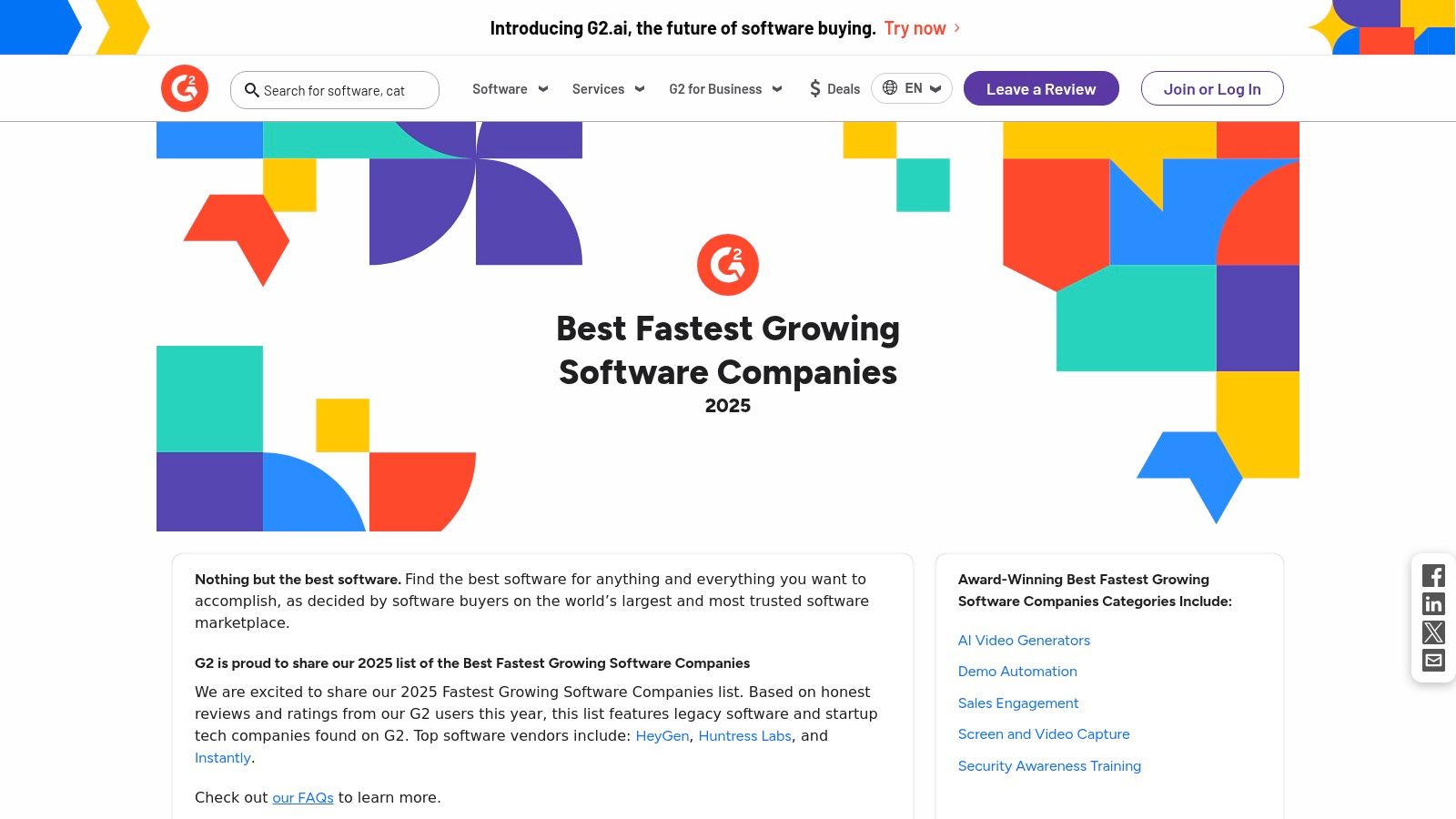
G2 is less of a single company and more of a comprehensive discovery platform where you can find and analyze many of the fastest growing SaaS companies in real-time. Instead of a static annual list, G2 leverages its vast database of verified user reviews and market presence data to create dynamic rankings. This allows B2B professionals to identify rising stars in virtually any software category, from project management to cybersecurity, based on user satisfaction and momentum scores.
The platform’s core strength lies in its trust-building, review-driven model. It provides an unparalleled depth of insight by aggregating feedback from actual users, which is then verified. This user-generated data powers its “Momentum Grid” reports, which specifically highlight products that are on a high-growth trajectory.
Key Features and How to Use Them
G2’s interface is designed for efficient software evaluation. Users can filter products by company size, industry, and specific features to find the perfect fit for their needs. Each product profile is a hub of information, often including pricing tiers, available integrations, and direct comparisons with competitors.
- Filter and Compare: Use the robust filtering options on category pages to narrow down choices based on your team’s specific requirements, like “must-have” integrations or suitability for small businesses.
- Read Verified Reviews: Dive into the reviews, paying close attention to comments from users in similar industries or company sizes. G2 verifies reviewers to ensure authenticity.
- Leverage Buyer Intent Data: For sales teams, G2 provides valuable buyer intent data, showing which companies are actively researching their product or category, creating a pipeline of warm leads.
Pros and Cons
| Pros | Cons |
|---|---|
| High Trust Factor: Relies on a large volume of verified user reviews. | Incomplete Pricing: Some vendors hide pricing behind a “Contact Sales” button. |
| Action-Oriented: Easy to move from research to a free trial or purchase. | Review Program Influence: Rankings can be swayed by vendors running aggressive campaigns for reviews. |
G2 is a free resource for software buyers. Its data-rich environment and focus on authentic user feedback make it an indispensable tool for anyone looking to identify and vet the most promising and fastest growing SaaS companies on the market.
Website: G2 Fastest Growing Products
2. Forbes Cloud 100
The Forbes Cloud 100 is an influential annual ranking that spotlights the top 100 private cloud companies globally. Produced in partnership with Bessemer Venture Partners and Meritech, this list serves as a definitive guide to the fastest growing SaaS companies that are still privately held. It’s an essential resource for investors, sales teams, and tech professionals looking to identify market leaders and high-momentum breakout vendors before they become household names.
Unlike real-time discovery platforms, the Cloud 100 is a curated, editorially driven list. It evaluates companies based on four key factors: market leadership, estimated valuation, operating metrics, and people and culture. This rigorous selection process ensures that every company featured is a significant player in the SaaS ecosystem, making it a trusted source for strategic business development and market analysis. You can learn more about how these rankings compare to a broader list of SaaS companies to understand their significance.

Key Features and How to Use Them
The Cloud 100 website is designed for easy navigation and quick access to high-level company data. Each profile provides a snapshot of the company’s product, headquarters, key leadership, and recent funding, linking directly to the vendor’s website for deeper exploration.
- Scan and Filter: Quickly scan the list by rank or use the country filter to find top private cloud companies in specific regions.
- Company Deep Dives: Click into any company profile to get a concise summary of its valuation, total funding, industry, and leadership team. This is perfect for initial research.
- Strategic Shortlisting: Use the list to build strategic shortlists for partnerships, investments, or sales prospecting, focusing on companies that have demonstrated significant growth and market validation.
Pros and Cons
| Pros | Cons |
|---|---|
| High Editorial Bar: A curated list based on rigorous expert evaluation. | Not a Buying Marketplace: Links out to vendor sites rather than facilitating direct evaluation. |
| Focus on Growth Leaders: Highlights top-performing private SaaS vendors. | Annual Cadence: The data is updated once a year, so it may not reflect the latest market changes. |
The Forbes Cloud 100 is a free and publicly accessible resource. Its value lies in its credibility and focus on the most promising, high-growth private companies that are shaping the future of cloud software.
Website: Forbes Cloud 100
3. Crunchbase (Pro/Business)
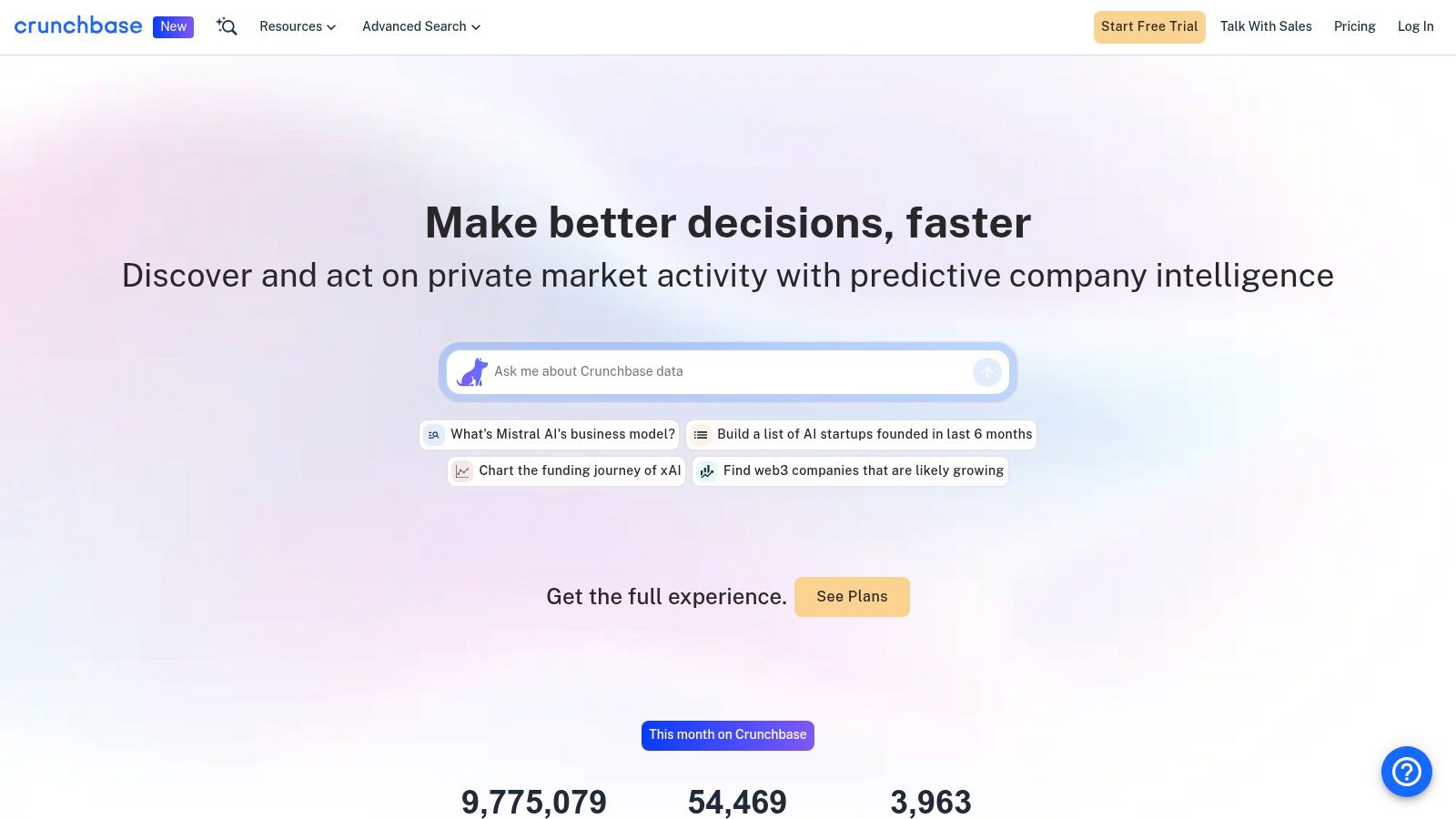
Crunchbase is a premier company intelligence platform ideal for discovering and tracking the fastest growing SaaS companies before they become mainstream. It goes beyond static lists by providing dynamic data on funding rounds, leadership hires, acquisitions, and other growth signals. This allows sales teams, investors, and marketers to identify companies on an upward trajectory with a high degree of precision.
The platform’s strength lies in its extensive, filterable database. Unlike review sites, Crunchbase focuses on firmographic data and predictive insights, such as its proprietary “Growth Score.” This makes it an indispensable tool for targeted research, competitive analysis, and building highly qualified lead lists based on real-world growth metrics.
Key Features and How to Use Them
Crunchbase Pro and Business tiers unlock powerful tools for surfacing high-growth companies. The interface is built for deep-dive research, allowing users to move from broad market analysis to specific company profiles seamlessly. While you can find private company financial information, the platform’s real value is in its growth signal tracking.
- Advanced Search: Use the hundreds of available filters to create hyper-targeted lists. Combine filters like “Last Funding Date,” “Headcount Growth,” and “Industry” to pinpoint SaaS companies that match your ideal customer profile.
- Utilize Growth Signals: Focus on predictive filters like “Growth Score” and recency of leadership hires. A recent hire of a “VP of Sales,” for example, often signals an impending expansion and budget allocation for new tools.
- Save Searches and Set Alerts: Create and save complex search queries to monitor specific market segments. Set up alerts to receive email notifications when companies meeting your criteria receive new funding, are acquired, or hit other key milestones.
Pros and Cons
| Pros | Cons |
|---|---|
| Highly Customizable Filters: Define “fastest-growing” based on your unique criteria. | Requires Paid Subscription: Advanced features and exports are behind the Pro/Business paywall. |
| Actionable for Outbound: Ideal for building targeted lead lists for sales, partnerships, and recruiting. | Data Varies: Data completeness can be inconsistent for smaller, private companies that are less public. |
While a free version is available for basic lookups, the real power of Crunchbase for identifying fast-growing companies is in its paid tiers. It is an essential tool for B2B professionals who need to stay ahead of market trends and connect with the next wave of industry leaders.
Website: https://www.crunchbase.com
4. AWS Marketplace – SaaS
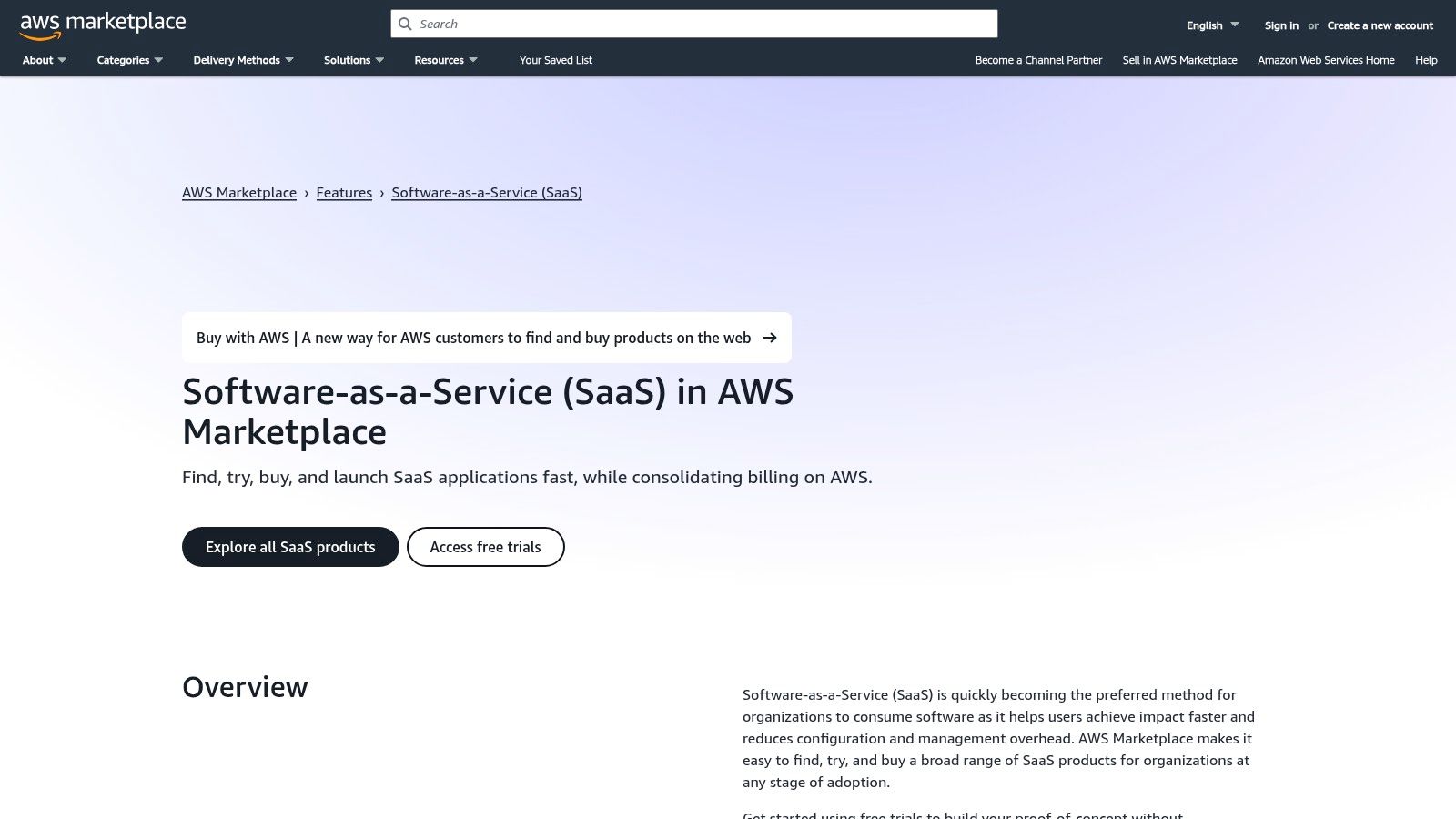
AWS Marketplace is a digital catalog that streamlines how businesses find, buy, and deploy third-party software. While it hosts a massive range of software, its SaaS category is a powerful tool for discovering many of the fastest growing SaaS companies, especially those in technical fields like cybersecurity, AI/ML, data analytics, and DevOps. It acts as a procurement hub integrated directly into the AWS ecosystem, making it easy for existing AWS users to adopt new solutions.
The platform’s unique advantage is its deep integration with AWS billing and infrastructure. This simplifies the often complex procurement and legal hurdles, allowing teams to quickly test and deploy innovative SaaS products from rising vendors. Instead of managing separate contracts and invoices, all subscriptions are consolidated into a single AWS bill, accelerating the adoption of new technologies.
Key Features and How to Use Them
The AWS Marketplace interface is built for technical evaluation and rapid deployment. Users can browse extensive SaaS listings, many of which offer free trials and flexible pricing models that align with cloud consumption patterns.
- Browse and Filter: Use the search filters to narrow down SaaS solutions by category (e.g., Security, DevOps), pricing model, or delivery method. Look for vendors offering free trials to test solutions risk-free.
- Leverage Quick Launch: Many SaaS products offer an AWS CloudFormation template for “Quick Launch,” which automates deployment and configuration, allowing you to get a proof of concept running in minutes, not days.
- Utilize Private Offers: For larger commitments, you can negotiate custom pricing and terms directly with vendors through a private offer, all managed within the Marketplace platform.
Pros and Cons
| Pros | Cons |
|---|---|
| Simplified Procurement: Consolidates all SaaS subscriptions into one AWS bill. | AWS Ecosystem Lock-in: Best suited for organizations already on the AWS platform. |
| Fast Proof of Concepts: Free trials and Quick Launch facilitate rapid testing. | Account Required: Requires an AWS account for all subscriptions and deployments. |
Accessing AWS Marketplace requires an AWS account, but browsing is open to anyone. Its seamless integration and focus on developer-centric tools make it an essential resource for tech-forward companies looking to discover and implement the fastest growing SaaS companies that build on the cloud.
Website: AWS Marketplace – SaaS
5. Salesforce AppExchange
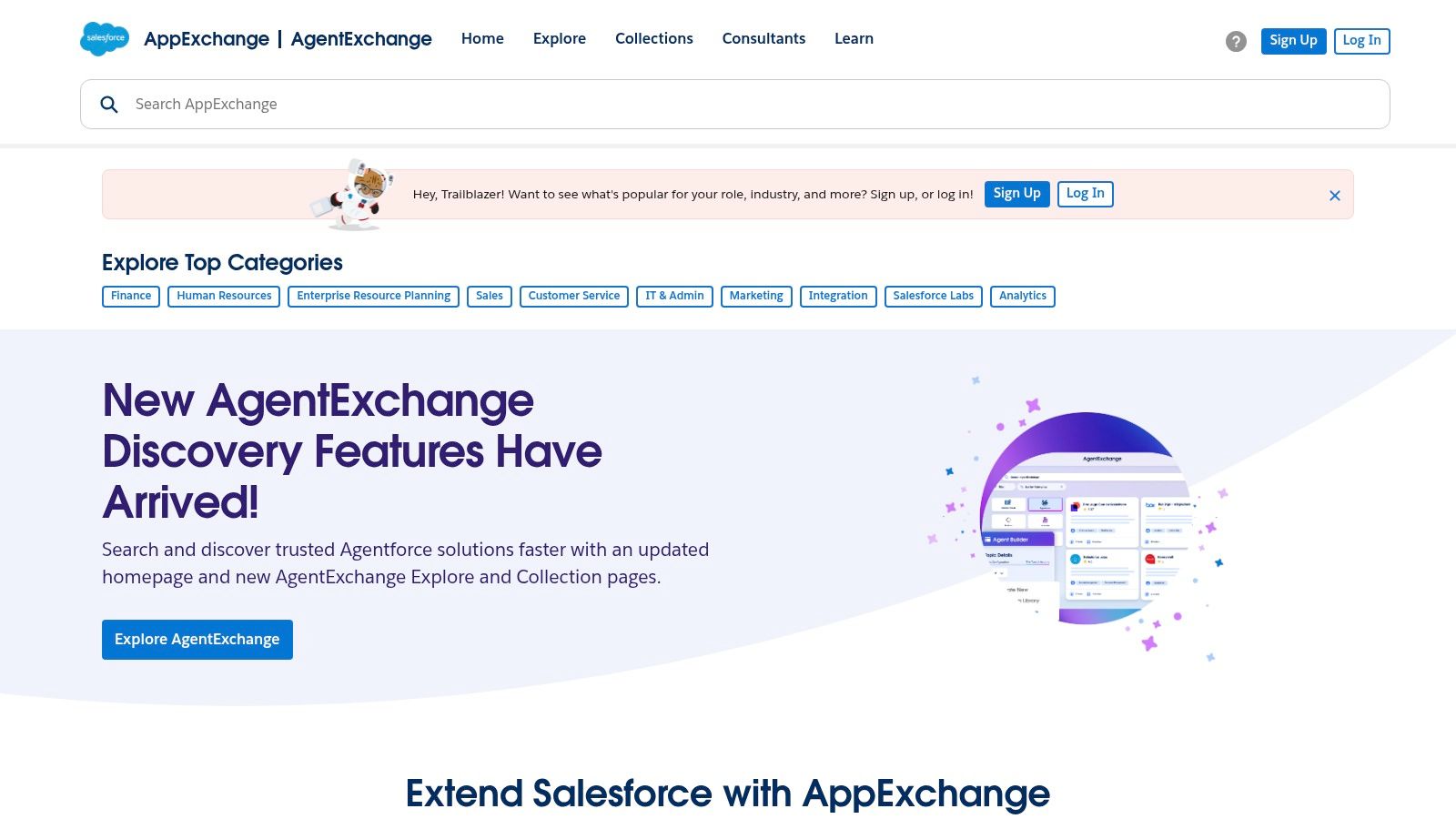
Salesforce AppExchange is the leading enterprise cloud marketplace for B2B apps and solutions that integrate directly with the Salesforce platform. While it’s a marketplace rather than a single company, it serves as a powerful discovery engine for identifying many of the fastest growing SaaS companies that build their solutions within the Salesforce ecosystem. For businesses heavily invested in Salesforce, it’s the go-to source for finding vetted, secure, and tightly integrated applications.
The marketplace’s core value lies in its curated and trusted environment. Every app listed on the AppExchange has undergone a rigorous security review, ensuring it meets Salesforce’s high standards for compliance and data protection. This makes it an essential resource for teams looking to extend their sales, service, or marketing capabilities without introducing security risks.
Key Features and How to Use Them
The AppExchange is designed to make finding and deploying new SaaS solutions seamless for Salesforce users. Its interface allows for easy filtering by category, price, user rating, and specific Salesforce product compatibility.
- Explore Curated Listings: Use the category filters to browse solutions for specific business needs like sales analytics, marketing automation, or customer service. Each listing provides detailed descriptions, screenshots, and verified user reviews.
- Utilize AppExchange Checkout: Look for apps that support AppExchange Checkout for a simplified purchasing process. This allows you to manage billing for multiple apps directly through your Salesforce account.
- Test with Trials: Many vendors offer free trials or freemium versions directly through their listings. Use these to test an app’s functionality and integration with your existing Salesforce setup before committing.
Pros and Cons
| Pros | Cons |
|---|---|
| Trusted Ecosystem: All apps are security-reviewed by Salesforce. | Salesforce-Centric: Exclusively focused on apps for the Salesforce ecosystem. |
| Clear Pricing and Trials: Most listings offer transparent pricing and trial options. | Inconsistent Billing: Not all apps use AppExchange Checkout, sometimes requiring external vendor contact. |
Accessing the AppExchange is free, with app pricing determined by individual vendors. For any organization using Salesforce, it is the most reliable and efficient platform for discovering innovative and secure SaaS solutions designed to enhance their CRM investment.
Website: Salesforce AppExchange
6. Deloitte Technology Fast 500 (North America)
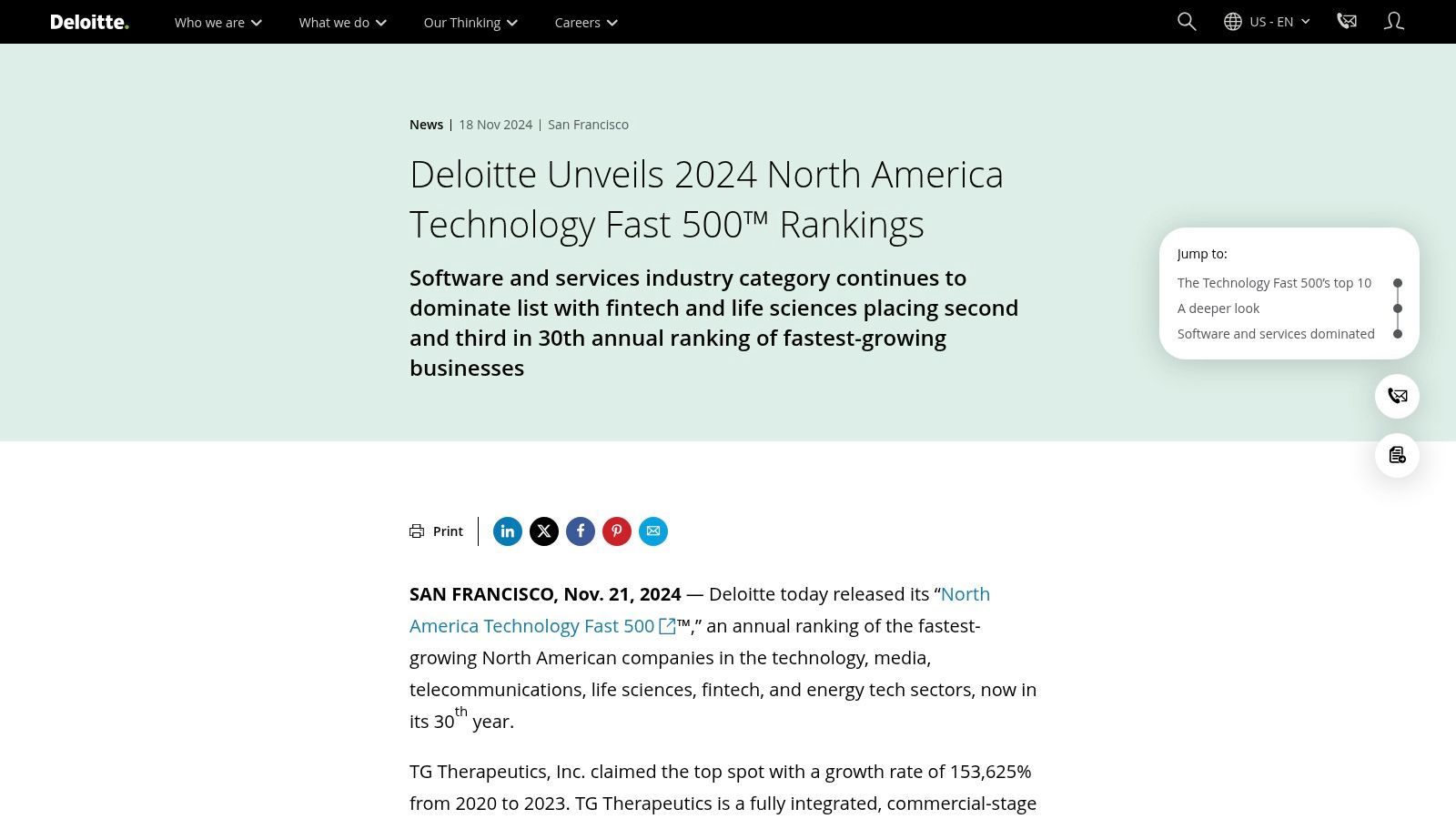
The Deloitte Technology Fast 500 is a prestigious annual ranking that identifies the fastest growing SaaS companies, alongside other tech leaders, in North America. Unlike a real-time marketplace, this list is a research-driven report that measures revenue growth over a three-year period. It serves as a powerful signal for identifying vendors who have achieved significant market traction and are on a steep upward trajectory.
For B2B professionals, the Fast 500 list is an invaluable resource for discovering accelerating companies that may not yet be on their radar. Because it is based on verified financial growth, it offers a quantitative measure of success and momentum. Many of the winners are innovative SaaS firms disrupting their respective sectors, from enterprise productivity to cybersecurity.
Key Features and How to Use Them
The Deloitte report is designed for research and analysis rather than direct software evaluation. It helps you build a list of high-potential vendors to investigate further. You can use its detailed breakdowns to understand market trends and identify top performers.
- Analyze Growth Rates: Use the published revenue growth percentages to benchmark potential vendors. A consistently high ranking over several years indicates sustained momentum.
- Identify Sector Leaders: Filter or sort the list by sector tags (e.g., software, fintech, digital content) to find the top growers in the specific categories relevant to your needs.
- Conduct Deeper Research: Once you have identified a promising company, use the associated press materials and their official website to learn more about their product offerings and market positioning. To dive even deeper, you can find more information in a comprehensive startup company database.
Pros and Cons
| Pros | Cons |
|---|---|
| Rigorously Compiled: Based on verified revenue growth, offering a clear benchmark. | Not a Marketplace: You must visit company sites separately for demos or purchases. |
| Strong Momentum Signal: Highlights companies with proven market traction and rapid growth. | Growth Metric Bias: Metrics may favor newer firms over established, steady-growth leaders. |
The Deloitte Technology Fast 500 list is a free, high-authority resource published annually. Its rigorous, data-backed approach provides a credible snapshot of the most dynamic and fastest growing SaaS companies, making it an essential tool for market research and vendor discovery.
Website: Deloitte Technology Fast 500
7. Financial Times – The Americas’ Fastest-Growing Companies (with Statista)
The Financial Times, in partnership with Statista, offers a different lens for identifying the fastest growing SaaS companies. Rather than a software marketplace, this is an annual journalistic ranking that highlights the 300 companies across the Americas with the highest compound annual growth rate (CAGR) in revenue over a three-year period. This list provides an independent, cross-industry benchmark of rapid growth, often featuring numerous IT and software firms that may not appear on venture capital-focused lists.
The core strength of this resource is its transparent, revenue-driven methodology. It cuts through market hype by focusing purely on verified financial performance, making it a reliable source for discovering businesses with proven traction and resilience. For sales and marketing teams, this list is a treasure trove of high-growth prospects that are actively scaling their operations and, consequently, their software and service needs.
Key Features and How to Use Them
The FT list is presented as an interactive table that can be sorted and analyzed. While not a direct B2B platform, its data can be leveraged strategically to build prospecting lists and understand market trends.
- Analyze by Revenue CAGR: Sort the list by the compound annual growth rate to immediately identify the most explosive growers. This helps prioritize outreach to companies on a steep upward trajectory.
- Filter by Sector: Use the sector breakdown to isolate “IT & Software” companies. This allows you to create a focused list of potential SaaS partners, customers, or investment targets.
- Review Editorial Context: Read the accompanying analysis from FT journalists. This provides valuable insights into the macroeconomic trends driving growth and spotlights the strategies of top-performing companies.
Pros and Cons
| Pros | Cons |
|---|---|
| Independent, Cross-Industry View: Highlights IT and software firms alongside other high-growth sectors. | Not a Buying Marketplace: You must visit each company’s website separately for research or contact. |
| Finds Non-VC-Focused Growers: Uncovers successful bootstrapped or non-traditional SaaS companies. | Broad Coverage: Requires manual filtering to isolate SaaS-specific businesses from the wider list. |
Accessing the list is free on the Financial Times website, though some related articles may be behind a paywall. Its data-first approach makes it an essential tool for market researchers and sales professionals looking for an unbiased view of the fastest growing SaaS companies based on hard revenue data.
Website: The Americas’ Fastest-Growing Companies
Fastest Growing SaaS Companies Comparison
| Item | Implementation Complexity | Resource Requirements | Expected Outcomes | Ideal Use Cases | Key Advantages |
|---|---|---|---|---|---|
| G2 | Low – web platform ready to use | Moderate – Access to reviews data | Fast discovery of trending SaaS with reviews | SaaS buyers seeking user-verified insights | Large volume of recent verified reviews |
| Forbes Cloud 100 | Low – curated editorial list | Low – public data only | Identification of top private cloud SaaS | Business development and strategic shortlists | High editorial standards with market insights |
| Crunchbase (Pro/Business) | Medium – subscription and filters | High – paid plans for full access | Custom, detailed discovery and tracking | Outbound sales, partnerships, competitor analysis | Advanced filters and growth signals |
| AWS Marketplace – SaaS | Medium – integration with AWS | Moderate – AWS account needed | Streamlined SaaS procurement and deployment | AWS users sourcing infrastructure SaaS | Consolidated billing, usage-based pricing |
| Salesforce AppExchange | Medium – Salesforce focused | Moderate – Salesforce account | Access to Salesforce-integrated SaaS apps | Salesforce-centric sales and service teams | Trusted ecosystem, direct payment options |
| Deloitte Technology Fast 500 (North America) | Low – annual list publication | Low – public data | Benchmarking fast revenue growth companies | Market research and vendor momentum tracking | Rigorous data on revenue growth |
| Financial Times – The Americas’ Fastest-Growing Companies | Low – annual published ranking | Low – public data | Identification of fastest-growing firms | Cross-industry SaaS/company discovery | Independent, cross-industry growth insights |
Finding Your Next Big SaaS Opportunity
Tracking the fastest growing SaaS companies is no longer just a passive exercise for investors. It has become a crucial strategy for sales teams, marketers, and business leaders looking to understand market trends, identify powerful new tools, or forge their next strategic partnership. The resources we’ve explored provide distinct, valuable perspectives on this dynamic landscape.
From the user-centric reviews on G2 to the rigorous financial analysis of the Deloitte Fast 500, each tool offers a different lens. Forbes and the Financial Times provide a high-level view of market leaders, while marketplaces like AWS and Salesforce AppExchange show you which tools are gaining traction within specific ecosystems. For deep-dive data, Crunchbase Pro delivers the granular funding and growth signals you need to build targeted lists.
Turning Insights into Actionable Strategy
The real value of these resources isn’t just in knowing who is growing; it’s about understanding why and how you can leverage that information. Moving forward, the key is to apply these insights directly to your business goals.
Your Next Steps:
- For Sales Teams: Use Crunchbase and the Deloitte Fast 500 to identify companies in hyper-growth. These businesses are often expanding their teams and have a pressing need for new software to manage their scale. They represent prime sales opportunities.
- For Marketing & Partnerships: Monitor G2 and the Salesforce AppExchange to spot emerging category leaders. These companies are excellent candidates for co-marketing webinars, integration partnerships, or content collaborations that can introduce your brand to a new, engaged audience.
- For Product Development: Analyze the Forbes Cloud 100 to understand which problem spaces are attracting the most investment and customer adoption. This can inform your own product roadmap and highlight opportunities for innovation or differentiation.
How to Choose the Right Tool for Your Needs
Selecting the right resource depends entirely on your objective. Don’t try to use every tool for every purpose. Instead, be strategic.
- If you need social proof and user sentiment: Start with G2.
- If you need detailed funding and company data: Crunchbase Pro is your best bet.
- If you need to find tools within a specific tech stack: Explore the AWS Marketplace or Salesforce AppExchange.
- If you need a list of vetted, high-growth public and private companies: Turn to the Deloitte Fast 500 or Forbes Cloud 100.
By combining insights from a few of these powerful sources, you can build a comprehensive picture of the SaaS market. This multi-faceted approach allows you to move beyond the headlines and find the actionable intelligence that will fuel your own growth. The next big opportunity is out there; with the right tools, you are perfectly positioned to find it.
How to Find Contact Information for Any SaaS Company Decision-Makers
Once you’ve used the resources above to identify the fastest-growing SaaS companies, your next priority is outreach. However, high-growth companies are often flooded with generic inquiries, and their leadership teams—CEOs, VPs of Sales, and Heads of Product—rarely list their direct office lines or personal emails publicly.
To break through the noise, you need a specialized B2B intelligence tool that provides verified, real-time contact data.
SaaS Database by Clevenio is the premier platform for sales professionals and recruiters who need to find and contact SaaS decision-makers quickly and accurately. While platforms like Crunchbase give you the “what” (funding and growth), Clevenio gives you the “who” and the “how.”
What You Get
- Verified Direct Dials: Skip the gatekeeper. Clevenio provides direct mobile and office numbers, ensuring your pitch actually reaches the human intended to hear it.
- Real-Time Email Validation: Avoid the dreaded “bounce-back.” Clevenio’s database is constantly refreshed to ensure email addresses are active and accurate.
- SaaS-Specific Filtering: You can filter leads not just by job title, but by the specific technologies the company uses (technographics). This allows you to tailor your outreach based on their existing tech stack.
- Seamless CRM Integration: Instead of manually copying and pasting data from a PDF ranking like the Deloitte Fast 500, you can export your findings directly into your CRM (Salesforce, HubSpot, etc.) to start your outbound sequence immediately.
Filter Saas Companies by Country
If you want to have a geographical focus, the SaaS database has you covered. Check out these options, among others.