
If you want to stop losing customers, you need to get ahead of the problem. Instead of scrambling when a customer is already leaving, the real goal is to build a business they won't want to leave in the first place. This means digging into why they churn, keeping them engaged, and creating an experience that’s just too good to abandon.
The bottom line? Retention shouldn't be a damage control tactic; it needs to be an active part of your growth engine.
Why Your Business Needs a Churn Reduction Plan Now
Customer churn isn't just another metric on your dashboard—it's a silent killer. Too many SaaS leaders treat it as a simple cost of doing business, but that mindset misses the dangerous, compounding effect it has over time.
Think of your customer base as a bucket you're constantly trying to fill. Churn is a hole in the bottom of that bucket. Even a small leak can empty it faster than you can pour new customers in.

This "leaky bucket" forces you into a relentless, expensive hunt for new leads just to stay afloat, let alone grow. It’s a vicious cycle. Your acquisition efforts are constantly being undermined by customers walking out the back door, putting a massive strain on your marketing and sales teams.
The True Cost of a Leaky Bucket
The real danger of churn is how quickly small monthly losses snowball into huge annual problems. The math is pretty sobering. A seemingly small monthly churn rate of 5% means you'll lose 46% of your customers over a single year. If that rate inches up to 10% per month, you’re looking at losing over 70% of your customer base annually.
For more on this, check out the State of Retention 2025 report on Churnkey.co. With those kinds of numbers, you're essentially forced to replace your entire customer base every year—a financially draining and completely unsustainable way to run a business.
"Churn isn't just a loss of revenue. It's a loss of momentum, a loss of advocacy, and a loss of the future value that a loyal customer brings."
This guide isn't just about highlighting the problem. It’s about reframing retention as your most powerful growth lever. We’ll walk through practical strategies to cut down customer churn by making it a core pillar of your business. The focus is on building a more profitable, resilient company by keeping the customers you’ve already worked so hard to win.
Shifting from Reactive to Proactive
A proactive churn reduction plan isn't about tossing last-minute discounts at people who are already on their way out. It’s about creating an environment where customers want to stick around.
What does that look like in practice? It comes down to a few key things:
- Deeply understanding user behavior. You need to spot the warning signs long before they turn into cancellation requests.
- Creating a stellar onboarding experience. Get users to their "aha!" moment as fast as possible.
- Continuously demonstrating value. This happens through great support, ongoing product education, and personalized communication.
When you focus on these areas, you stop playing defense and start playing offense. It’s a mindset shift that transforms your approach from reactive firefighting to a proactive strategy for long-term success. This is the first step in turning that leaky bucket into a fortress of customer loyalty.
Finding Out Why Your Customers Are Really Leaving
Before you can fix your leaky bucket, you have to find the holes. You can’t just guess why customers are leaving and throw solutions at the wall to see what sticks. That’s a recipe for wasted time and effort. The first real step to cutting your churn rate is to diagnose the specific, unfiltered reasons people are canceling.
Don't treat all churned customers as one big, unhappy group. Start by breaking them down into smaller segments. Are they on a specific plan? How long were they a customer? What features did they actually use?
Looking at churn this way often uncovers trends you’d otherwise miss. For example, maybe you find that users on your cheapest plan are leaving in droves after the first three months. That’s a huge clue. It could point to a pricing problem or a major value gap in that specific tier.
Go Beyond Just the Numbers
A solid diagnosis always mixes hard data with human stories. The data tells you what's happening, but the stories from customers tell you why. You absolutely need both.
Start by digging into your product analytics. Look at the behavior of users who churned before they canceled. Did they stop using a feature that most of your power users love? Did their login frequency suddenly drop off a cliff? These are the digital breadcrumbs that lead you straight to the problem.
At the same time, look for patterns in your support tickets. If you see a sudden spike in bug reports or complaints about a specific feature from users who then cancel a month later, that’s a massive red flag. This kind of data gives you an objective look at where the friction is in your customer experience.
You Have to Ask "Why"
Data can point you in the right direction, but nothing—and I mean nothing—beats hearing directly from the people who decided your product wasn't for them. This is where you get the real, unfiltered context that spreadsheets can never give you.
Exit surveys are a decent starting point. Just keep them short and to the point. No one wants to fill out a 20-question survey for a product they’ve already decided to leave.
But the real gold is in the cancellation interview. I know, it can feel awkward. But a quick, 15-minute call with a customer who is on their way out can give you more actionable insight than a hundred survey responses. The trick is to go into the conversation with genuine curiosity, not a defensive attitude. Your goal isn't to win them back right there on the call; it's to learn.
Here are a few questions I’ve found work wonders in these interviews:
- "What was the main reason you decided to cancel?" (Keeps it broad and gets their top-of-mind answer.)
- "Was there a specific moment or event that made you decide now was the time?" (This helps you find specific trigger points.)
- "What are you planning to use instead?" (Instant, free competitor intelligence.)
- "If you had a magic wand and could change one thing about our product, what would it be?" (This is fantastic for uncovering core product gaps.)
When you analyze this feedback, you can start to separate the root causes. Is it a missing feature they can’t live without? Is your pricing totally out of sync with the value they feel they’re getting? Or was it just a series of bad support interactions that killed their trust?
By combining hard data with direct, honest feedback, you build a complete picture of why people are leaving. This is the foundation of any retention strategy that actually works.
To help you get started, here's a breakdown of common churn drivers I've seen over the years and how you can spot them early.
Common Churn Drivers and How to Identify Them
| Churn Driver | What It Looks Like (Warning Signs) | How to Measure It (Data Source) |
|---|---|---|
| Poor Onboarding | Low initial feature adoption, quick drop-off in usage after signup, high volume of basic support tickets from new users. | Product analytics (feature adoption rates), support ticket logs, new user surveys. |
| Product Gaps | Customers consistently request a specific feature you don't have, or they switch to a competitor who does. | Cancellation surveys/interviews, support tickets (feature requests), competitor analysis. |
| Bad Customer Service | Negative CSAT/NPS scores, long ticket resolution times, repeat contacts for the same issue, complaints on social media. | Help desk software (ticket data), customer satisfaction surveys, review sites. |
| Pricing/Value Mismatch | High churn after a price increase, comments in exit surveys about cost, low usage of premium features on higher tiers. | Exit surveys, product analytics (usage vs. plan), customer interviews. |
| Technical Issues/Bugs | Spikes in bug reports, increased system downtime, complaints about slowness or reliability. | Application performance monitoring (APM) tools, bug tracking software, status page history. |
Identifying these drivers isn't a one-and-done task. It’s an ongoing investigation that helps you improve every single stage of the SaaS customer journey.
Keep in mind, the churn landscape can also look wildly different depending on your industry. In 2025, for example, professional services firms had an average churn of about 27%, while the wholesale sector was dealing with a massive 56% churn rate. Factors like low switching costs and supply chain issues play a huge role. Understanding these average churn rates by industry can help you put your own numbers into perspective.
Ultimately, every piece of feedback, every data point, and every customer conversation is a clue. It’s your job to piece them together to build a stickier product and a more loyal customer base.
How to Build a Proactive Customer Engagement Strategy
Let's be honest: the best way to fight churn is to build a product and an experience that customers can't imagine leaving. It’s about getting ahead of the problem. Instead of scrambling to save an account that's already halfway out the door, you create a system that builds loyalty from day one.
If you're waiting for a user to stop logging in, you've already waited too long. A truly proactive approach begins the second they sign up, weaving your product so deeply into their workflow that it becomes indispensable. You're not just selling software; you're building a partnership.

Nail the First Impression with Personalized Onboarding
Those first few moments a new user spends with your product are everything. A clunky, generic onboarding flow is a one-way ticket to the churn list. Your goal isn’t to give them a grand tour of every single feature; it's to get them to their personal "aha!" moment as fast as humanly possible.
This means you need to know why they signed up. A marketer trying out your analytics tool is chasing different goals than a developer from the same company. Your onboarding has to reflect that reality.
For example, don't just dump everyone into the same product tour. Use the information they give you at signup to create a custom path. If a user selects "team collaboration" as their main goal, your onboarding should immediately steer them toward inviting colleagues and setting up shared dashboards. It's a proven strategy—a staggering 68% of users are more likely to stick around if a business provides great onboarding and education. To really get this right, check out our deep dive on SaaS onboarding best practices.
A great onboarding experience isn't about teaching someone how to use your software. It's about proving to them, within minutes, that your software will make their life easier.
Use Behavior-Triggered Messages to Re-Engage
Okay, so they're onboarded. Your job isn't done; it's just getting started. To keep them around for the long haul, you have to maintain that initial momentum. This is where behavior-triggered messages become your secret weapon.
These aren't just random marketing blasts. They're smart, timely communications based on what a user is—or isn't—doing inside your app.
- Celebrate the Wins: Did a user just complete a major project or hit a key milestone? Send a quick, congratulatory email. You can even include a pro-tip for what they can do next.
- Give a Gentle Nudge: Has a user gone quiet for a week? Don’t let them drift away. Trigger a friendly, automated email highlighting a new feature or a tutorial that’s relevant to what they were last working on.
- Offer Help Before They Ask: Is your data showing a team repeatedly fumbling with a certain feature? Step in! Proactively send them a link to a 2-minute video tutorial or an invite to a quick Q&A with a specialist.
This kind of communication feels genuinely helpful, not creepy or intrusive. It shows you're paying attention and are truly invested in their success.
Turn Education into a Retention Tool
So many customers churn not because the product is bad, but because they never figure out how to get the most from it. They get stuck in the shallow end, using only the most basic features, and eventually decide it isn't worth the subscription fee.
Ongoing education is the cure.
You need to think bigger than a static knowledge base. The goal is to build an entire educational ecosystem that continually helps users level up their skills and unlock more value.
Here’s How to Put That into Action:
- Create Targeted Tutorials: Make short, punchy videos that solve one specific problem. If you see a lot of users dropping off during a particular workflow, create a guide specifically for that pain point.
- Host Insightful Webinars: Go beyond a simple feature demo. Host live sessions that feature customer success stories or bring in industry experts to talk strategy. This delivers value that extends beyond your software.
- Use In-App Guides: Once a user has mastered the basics, use tooltips and contextual pop-ups to introduce them to more advanced features. This encourages them to go deeper into the product over time.
Imagine your project management tool notices a team creating tasks but never using the dependency feature. That's a perfect trigger for an in-app prompt: "Tired of projects getting off track? Link your tasks to build a clear timeline. Here's how." That one little nudge could unlock a massive amount of value, making your tool stickier than ever.
Ultimately, a proactive strategy is all about creating a stream of small, positive interactions. When your customers feel supported, successful, and understood, the thought of churning will barely even cross their minds.
Using Customer Feedback to Build Unbreakable Loyalty
Think of your customer service team as more than just a problem-solving squad. They're on the front lines, and they have one of the most direct impacts on whether a customer sticks around. When people feel like they're shouting into the void, they don't just get annoyed—they cancel their subscriptions.
It all boils down to listening. You can't fix what you don't know is broken. By actively seeking out and listening to feedback, you can turn your support department from a necessary expense into a powerful force for keeping customers happy. This means looking past ticket numbers and starting to really dig into what people are telling you, day in and day out.
Turning Every Interaction into an Insight
Your support channels—live chat, email, even social media DMs—are a treasure trove of honest, unfiltered feedback. Every single one of those conversations holds clues about where your product is causing friction or where your customer experience is falling short. The trick is to stop seeing these as just tickets to close and start treating them as valuable data points.
Encourage your agents to do more than just provide an answer. Give them a simple way to tag conversations by topic. Are dozens of users asking about the same billing issue? Are new sign-ups getting stuck at the exact same point in your onboarding flow? Spotting these patterns is how you shift from putting out individual fires to fixing the faulty wiring that’s causing them in the first place.
Customer feedback is a gift. It's your users telling you exactly what you need to fix to keep their business. Ignoring it is like ignoring a fire alarm.
Once you have a system for collecting these insights, make sure they get back to your product and marketing teams. This creates a powerful feedback loop. Your roadmap starts to reflect what users actually need, not just what you think they want.
Empowering Your Support Team to Be Heroes
A single fantastic support experience can completely change a customer's mind about your company. When an agent truly helps someone, they’re not just fixing a technical glitch; they're forging a human connection. This is how you can turn a customer on the brink of churning into one of your biggest fans.
To make this a regular occurrence, you need to give your support team two things: autonomy and context.
- Autonomy to Act: Don't tie their hands with red tape. Let your agents make decisions. This might mean offering a small account credit for a frustrating bug, extending a trial for someone who needs more time, or hopping on a quick call to guide them through a tricky feature. When your team can do the right thing without asking for permission, they create moments of real magic.
- Context to Understand: Give them the full picture. An agent who can see a customer's past support tickets, how active they are in the app, and maybe even a few notes from the sales process can offer support that feels incredibly personal and effective. Nothing is more frustrating for a customer than having to explain their entire history every time they reach out.
The impact here is huge. Poor service is a primary driver of churn. In the United States, 59% of consumers say they'll walk away from a brand after several bad experiences, and a shocking 17% will leave after just one. On the flip side, 74% of customers feel more loyal to a brand when they feel heard, which shows that a good conversation is often more valuable than a discount. You can find more customer retention statistics on Sprinklr.com.
Ultimately, investing in your support team is a direct investment in your revenue. Every problem they solve with skill and empathy is one less customer you have to worry about losing. You're building a reputation for being there when it counts, and that kind of trust is something a competitor can't easily replicate.
Smart Offboarding and Effective Win-Back Campaigns
Look, no matter how great your product is, some customers will eventually head for the exit. It’s inevitable. But how you handle that moment is what separates the pros from the amateurs. A cancellation isn't just an endpoint; it's a final, critical opportunity to learn, retain, and leave a positive impression.
A smart offboarding process isn’t about begging someone to stay. It’s an intelligent, automated flow that actually responds to why they’re leaving. This is your last real chance to save the account or, at the very least, get some brutally honest feedback to guide your product roadmap.
Turning Cancellation into a Conversation
The second a user clicks that "cancel subscription" button, a window of opportunity opens. A generic "Sorry to see you go" page is a total waste of that moment. Instead, you need to present them with a simple, one-question survey: "What's the main reason you're leaving?"
Based on their answer, you can instantly offer an alternative that addresses their specific problem. This isn't pushy; it's helpful. And it can stop churn dead in its tracks.
For example, if someone selects "It's too expensive," you could automatically trigger an offer for a 15% discount for the next three months. If they choose "I'm not using it enough right now," a one-click button to pause their subscription for 60 days is a much better outcome than losing them for good.
A well-designed offboarding flow does more than just reduce churn. It becomes one of your most honest feedback channels, giving you real-time data on your biggest product gaps and pricing friction.
The right incentives, like loyalty programs or targeted discounts, can have a massive impact on both keeping customers and encouraging them to use your product more.
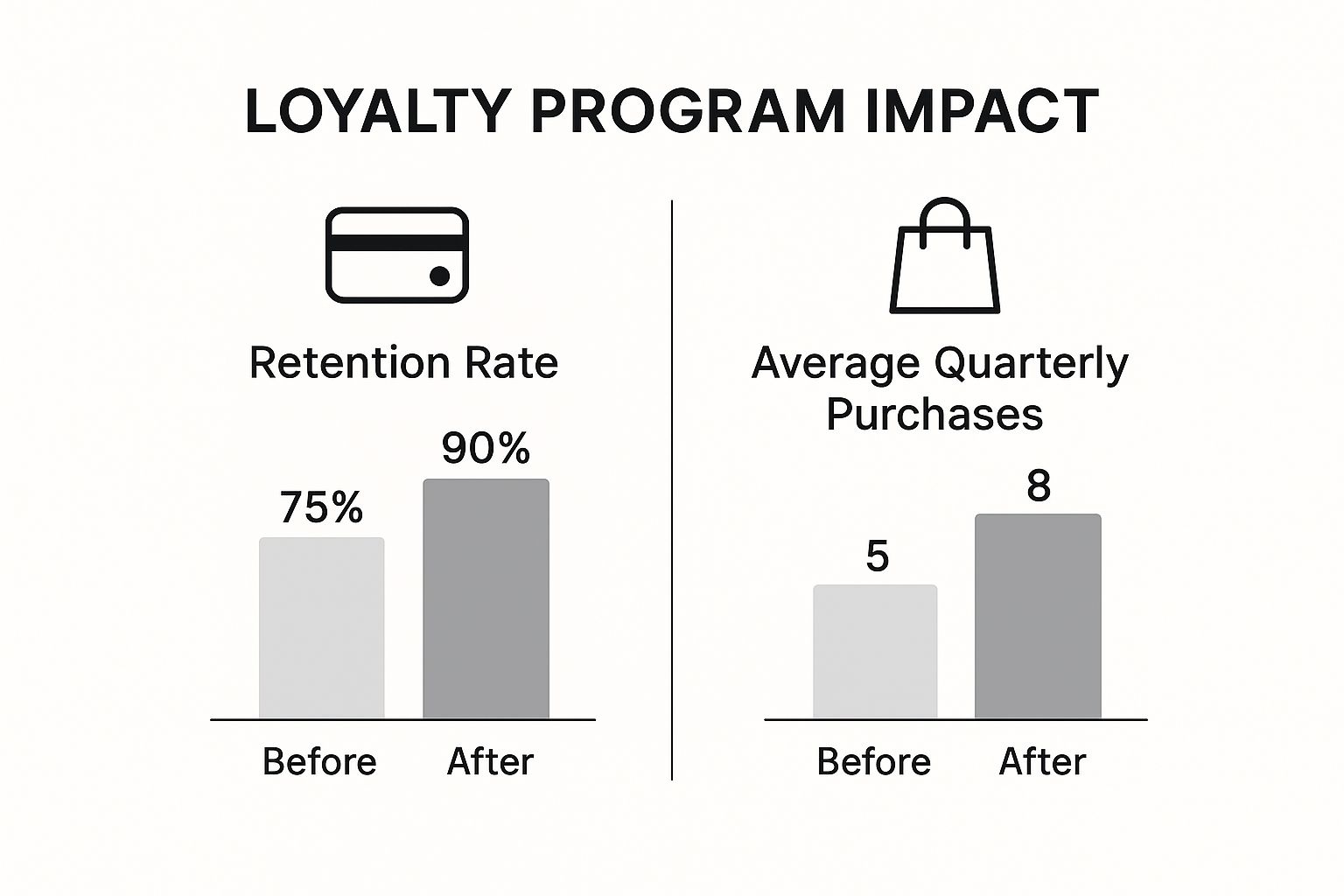
As you can see, these programs don't just keep people around; they often lead to them spending more or engaging more frequently. It’s a direct link between smart incentives and a healthier bottom line.
To make this truly effective, you need to map common reasons for leaving to specific, compelling offers.
Cancellation Reason vs. Retention Offer
| Reason for Leaving | Primary Retention Offer | Secondary Offer | Goal of Offer |
|---|---|---|---|
| "It's too expensive" | Offer a 15-25% discount for the next 3 months. | Downgrade to a more affordable, limited-feature plan. | Provide immediate financial relief and prove value. |
| "Missing a key feature" | Show them a link to your public roadmap where they can vote on features. | Offer a 1-on-1 call with a product manager to discuss their needs. | Make them feel heard and show a commitment to improvement. |
| "I'm not using it enough" | Offer to pause the subscription for 30-90 days, free of charge. | Offer free access to a new training webinar or course. | Remove the immediate pressure while keeping them in your ecosystem. |
| "Switching to a competitor" | Present a competitive feature comparison and offer a discount. | Ask for specific feedback on what the competitor does better. | Re-establish your value proposition and gather competitive intel. |
| "Temporary project/need" | Offer to pause the account and retain all their data for when they return. | Offer a final "export all data" option. | Make it easy to come back and end the relationship on good terms. |
Building a flow like this transforms your offboarding from a passive form into an active retention tool.
Crafting Powerful Win-Back Campaigns
What about the ones who get away? Don't just write them off. A well-timed, personal win-back campaign can bring a surprising number of churned customers back. Remember, acquiring a new customer is up to five times more expensive than retaining an existing one, so these efforts are incredibly high-leverage.
The secret to a good win-back campaign is segmentation. Don't just blast every lost user with the same generic "We miss you!" email—it's lazy and it doesn't work. You have to group them based on why they left and how long they were a customer.
Here’s a simple, battle-tested approach:
- Segment by Cancellation Reason: Group users based on the feedback they gave you during offboarding (e.g., "Missing Features," "Too Expensive," "Bad Support Experience").
- Wait for a Real Update: Don't email them a week later with nothing new. Wait until you have a genuinely compelling reason to get in touch. Did you just launch that feature they were begging for? That’s your trigger.
- Personalize Your Outreach: The email has to acknowledge their specific reason for leaving. It shows you were actually listening and makes your message feel relevant, not like a marketing blast.
Think about it. If someone left because you didn't have a crucial integration, a subject line like, "Remember that HubSpot integration you asked for?" will get their attention. The email itself should be direct, reference their previous feedback, and clearly show how your product now solves their original problem. If you want to dive deeper into crafting these messages, I highly recommend digging into https://saasdatabase.net/b-2-b-email-marketing-best-practices/.
Even if a former customer doesn’t come back, a graceful offboarding and a thoughtful win-back attempt leave the door open for the future. You’ve treated them with respect, and that's a long-term investment in your brand's reputation.
Common Questions About Reducing Customer Churn
Even with the best-laid plans, you're going to have questions as you work to lower customer churn. Let's tackle some of the most common ones that pop up for SaaS teams so you can get clear, no-fluff answers and get back to work.
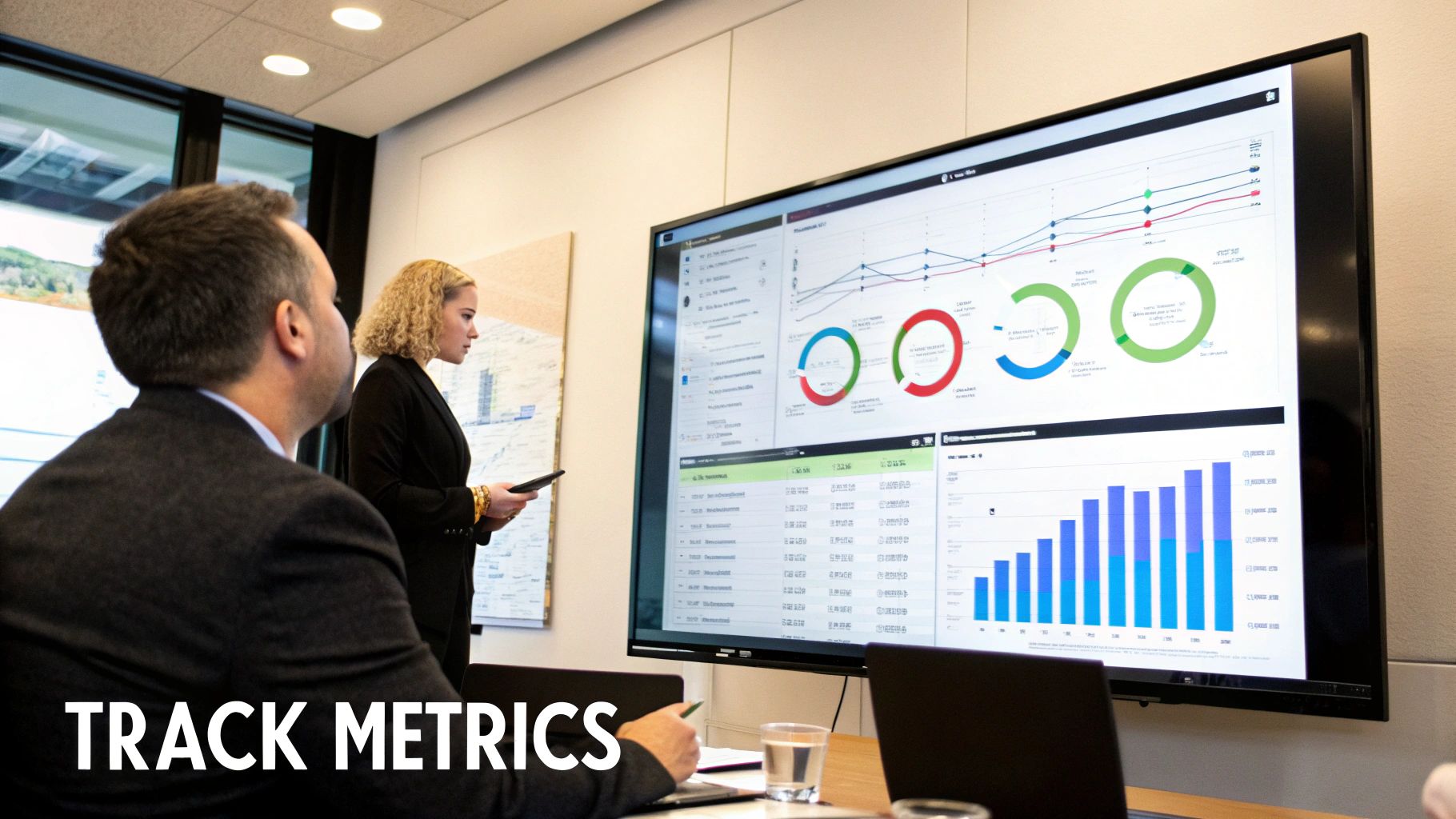
We'll get into everything from what your churn rate should be to the nitty-gritty of winning back customers you thought were long gone.
What Is a Good Customer Churn Rate?
This is the million-dollar question, and the honest answer is: it really depends. There's no single magic number. What's considered "good" can change dramatically based on your industry, company size, and the types of customers you serve.
Generally speaking, an annual churn rate of 5-7% is a pretty solid benchmark for a SaaS company. But context is everything. A startup selling to small businesses might see a monthly churn of 3-7%, which feels high but can be normal for that stage. An enterprise SaaS company, on the other hand, would be aiming for a much lower monthly rate, probably closer to 1-2%.
Your goal shouldn't be to hit some universal "good" number. The real win is to consistently track your own churn rate and see it trending downward over time. It's all about making steady progress.
How Long Until I See Results from My Efforts?
This one depends entirely on what you're doing. Some fixes can make a difference almost overnight, while others are a much longer game.
- Quick Wins (Weeks to a Month): Things like adding a compelling discount offer to your cancellation flow or beefing up your onboarding emails can show results fast. You'll see fewer people finalize their cancellation almost immediately.
- Long-Term Plays (Months to a Year): Deeper strategic shifts—like a complete overhaul of your customer support system or building a thriving user community from scratch—take time to mature. These efforts are about building genuine loyalty, and while their impact on churn is gradual, it's also far more permanent.
Should I Focus on Churn Prevention or New Customers?
It's a classic dilemma. While you obviously need both to grow, putting your energy into retention is almost always the smarter financial move.
It's a well-worn stat for a reason: acquiring a new customer can be five to seven times more expensive than keeping an existing one.
Think of your business as a bucket. If it has holes, your first priority has to be plugging them. Pouring more water (new customers) into a leaky bucket is an exhausting and expensive way to grow. Get churn under control first, then you can fill it up more aggressively.
What Is the Difference Between Logo Churn and Revenue Churn?
Getting your head around this is absolutely critical. They sound similar, but they tell you two very different stories about your business.
- Logo Churn: This is just the percentage of customers (or "logos") you lose over a certain period. It answers the question, "How many accounts left?"
- Revenue Churn: This measures the percentage of revenue that walked out the door with those customers. It answers the question, "How much money did we lose?"
Losing ten tiny accounts could have the same logo churn as losing one massive enterprise client. But the revenue churn? That would be a completely different—and much scarier—story. You need to track both to see the full picture.